Ebisu, Daikanyama and Nakameguro: Expat Living Guide
Ebisu, Daikanyama and Nakameguro offer Tokyo expat life without the embassy-district price tag. Full guide to rents, atmosphere, commute links and daily life.
Ebisu, Daikanyama and Nakameguro form one of the most attractive residential clusters in Tokyo for expats who want an international, walkable, high-quality urban environment without paying Hiroo or Roppongi prices. These three neighborhoods sit on the same Hibiya Line corridor as Hiroo, are connected by the Tokyu Toyoko Line, and share a distinctive atmosphere: independently-owned cafes, tree-lined streets, boutique retail, and a visible international community.
Quick answer: Ebisu, Daikanyama and Nakameguro are among Tokyo's most desirable expat neighbourhoods: walkable, stylish, international, with great cafes and easy access to central offices. Rents are high (a 1LDK often runs 200,000 to 300,000 JPY), but slightly below Hiroo and Minato. Ebisu suits families and connectivity, Daikanyama the design-minded, Nakameguro the young and trendy.
This guide covers rents, atmosphere, commute, and practical life across all three.
Ebisu: The Accessible Starting Point
Ebisu is the most connected of the three neighborhoods. It sits on both the JR Yamanote Line and the Tokyo Metro Hibiya Line, giving it direct access to Shinjuku (8 minutes), Shibuya (3 minutes), Roppongi (5 minutes), and Ginza (15 minutes). For professionals with business requirements spread across multiple districts, Ebisu is often the most efficient base.
Atmosphere: Upscale residential mixed with commercial. Yebisu Garden Place, the redeveloped Sapporo brewery site, anchors the eastern side with restaurants, a museum, a cinema, and open plaza space. The west side is quieter, with narrow streets, independent restaurants, and a relaxed pace.
Typical rents:
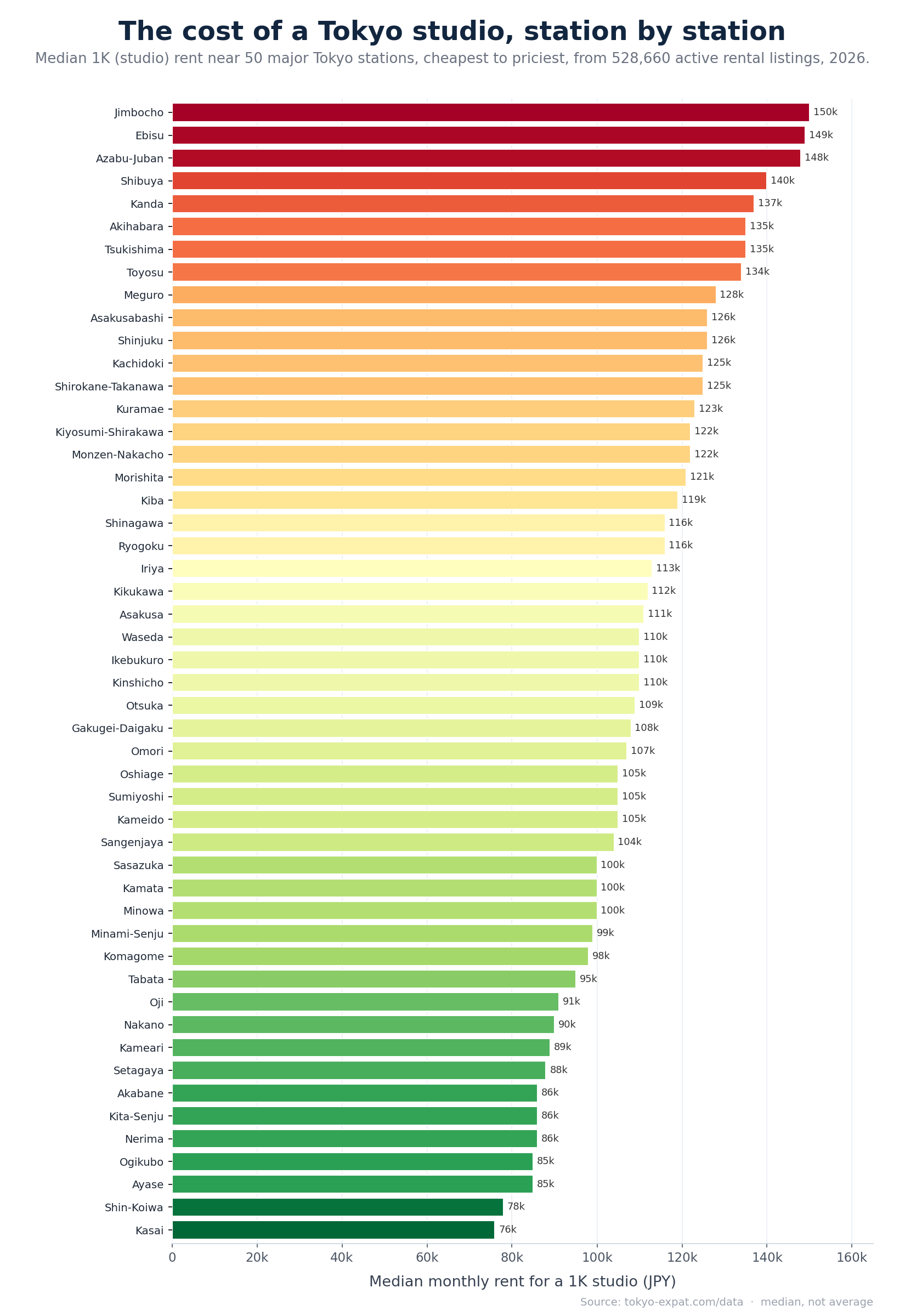
- 1K: 110,000-160,000 JPY/month
- 1LDK: 160,000-240,000 JPY/month
- 2LDK: 240,000-350,000 JPY/month
Expat profile: Professionals, couples, and single expats in their 30s-40s. Strong French and European presence, partly due to the proximity to the French cultural center (Institut Franco-Japonais) nearby.
Daikanyama: The Boutique Village
Daikanyama is 10 minutes on foot from Ebisu and has a distinct character: it is quiet, curated, and architecturally interesting. The neighborhood is known for independent design shops, concept stores, the Hillside Terrace complex, and the iconic T-Site bookstore. It has no large-scale commercial development and deliberately limits chain retail.
Atmosphere: Residential village feel inside a major city. Streets are narrow and low-rise, with a high density of renovated buildings and well-maintained sidewalks. Very low noise level by Tokyo standards. Popular with creative professionals, architects, and art directors.
Typical rents:
- 1K: 105,000-155,000 JPY/month
- 1LDK: 155,000-230,000 JPY/month
- 2LDK: 230,000-340,000 JPY/month
Transport: Daikanyama station on the Tokyu Toyoko Line gives direct access to Shibuya (2 minutes) and Yokohama. For Roppongi and Ginza commuters, a short walk to Ebisu is more efficient.
Expat profile: Creative professionals, designers, writers, long-term Japan residents who value aesthetics and neighborhood character over transit efficiency.
Get the Japan Relocation Checklist (free PDF)
90+ concrete action items to prepare your move to Japan, across 7 phases. Sent instantly.
Nakameguro: The Most Dynamic of the Three
Nakameguro has undergone significant transformation over the past decade. The canal (Meguro River) lined with cherry trees has made it one of the most photographed urban spaces in Tokyo. The neighborhood attracts a younger demographic than Ebisu or Daikanyama, with a dense concentration of restaurants, bars, concept stores, and a strong creative economy.
Atmosphere: Energetic, trendy, and increasingly expensive. The canal area is crowded on weekends and during cherry blossom season (late March to early April). Away from the canal, the residential streets are quiet and residential.
Typical rents:
- 1K: 100,000-150,000 JPY/month
- 1LDK: 150,000-220,000 JPY/month
- 2LDK: 220,000-320,000 JPY/month
Transport: Nakameguro station on both the Tokyo Metro Hibiya Line and the Tokyu Toyoko Line gives direct access to Roppongi (10 minutes), Ginza (15 minutes), and Shibuya (4 minutes).
Expat profile: Younger expats, freelancers, remote workers, couples without children. Strong English-speaking community. Less diplomatic, more creative.
How These Three Compare to Hiroo
| Factor | Ebisu/Daikanyama/Nakameguro | Hiroo/Minami-Azabu |
|---|---|---|
| Rent 1LDK | 150,000-240,000 | 200,000-300,000 |
| International schools nearby | Moderate | High |
| English-speaking services | Good | Excellent |
| Transport connectivity | Excellent | Good |
| Atmosphere | Urban village | Diplomatic residential |
| International supermarket | Limited | National Azabu |
For families with children in international schools, Hiroo and Minami-Azabu remain the reference. For professionals without children, the Ebisu-Daikanyama-Nakameguro corridor typically offers better value per yen.
See: Hiroo and Minami-Azabu expat neighborhood guide and Tokyo rent by neighborhood 2026
Finding an Apartment in This Corridor
Properties in this area are popular and move quickly. The best apartments in Nakameguro and Daikanyama in particular are often rented through networks and property managers before appearing on public portals.
Contact us for a brief focused on the Ebisu-Daikanyama-Nakameguro corridor.
To discover the best spots in this corridor before settling in, GetYourGuide offers guided tours of Tokyo and food experiences in these neighbourhoods. (affiliate link)
Read next: Tokyo neighborhoods guide for expats and Tokyo rent by neighborhood 2026.
Frequently Asked Questions
What is the difference between Ebisu, Daikanyama and Nakameguro for expats?+
How much cheaper are Ebisu and Nakameguro compared to Hiroo?+
Is Nakameguro a good place to live as an expat in Tokyo?+
Which of the three neighborhoods is best for expat families in Tokyo?+
Get the Japan Relocation Checklist (free PDF)
90+ concrete action items to prepare your move to Japan, across 7 phases. Sent instantly.
Need help finding housing in Tokyo?
I help you find the right home, with no Japanese guarantor and no language barrier. Free consultation, no commitment, in English or French.
Book my free consultation