Moving to Tokyo in Summer: Timing, Heat and Costs
Moving to Tokyo in July or August? The rental market is quieter and often cheaper than spring. Timing, heat, Obon logistics and budget, all explained.
Summer is the forgotten season of the Tokyo rental market. Everyone talks about spring (March-April, mass moving) and the October intake, but July and August form a lull few foreigners exploit. Yet moving to Tokyo in midsummer has real upsides, as long as you plan for the heat and a few calendar traps.
Quick answer: Moving to Tokyo in July-August means a quieter market than spring: less competition, landlords more open to negotiation, units that stay available longer. The constraints: extreme heat and humidity (check the air conditioning), the Obon week in mid-August that slows agencies and movers, and the start of typhoon season. Handled well, summer is a good time to find a place, often cheaper.
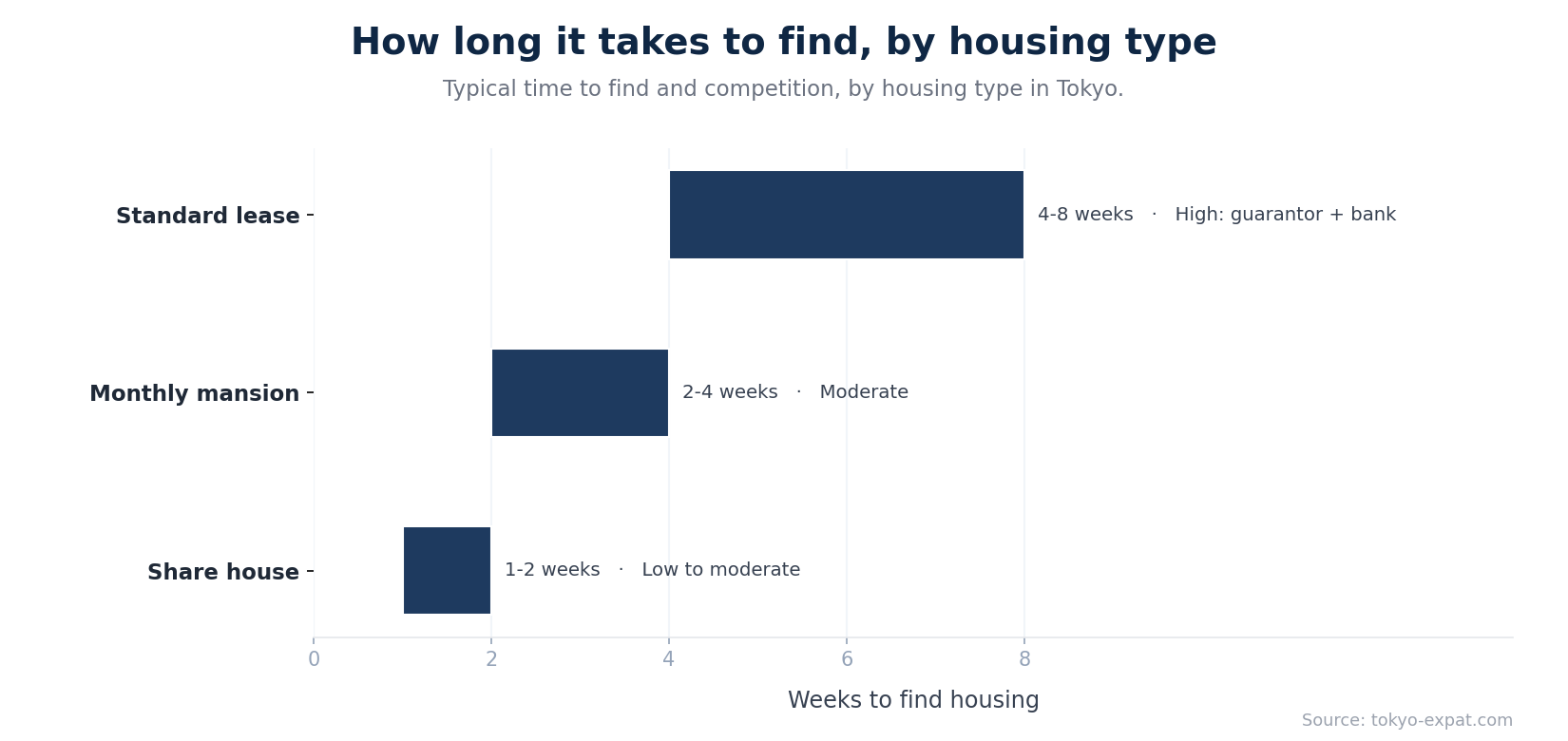
Why summer is a market lull (and why that is good news)
In Japan, most moves cluster in February to April, around the start of the fiscal and school year. In July-August demand drops: fewer applicants per unit, listings that stay online for weeks, and landlords more willing to discuss rent or move-in fees rather than leave a place empty.
For a foreigner, that is a favourable window. You have time to compare, to view without pressure, and real room to negotiate the rent. In March, by contrast, the best units go in 48 hours and negotiation is wishful thinking.
Heat: your first priority
Tokyo summers are brutal: 33 to 36°C by day, tropical nights, humidity near saturation. Housing is not a comfort detail here, it is a livability question.
Check before signing:
- Air conditioning in every main room (the unit must be present and working, not just "possible to install").
- Orientation: a south-facing apartment with no shade overheats badly in the afternoon.
- Floor and ventilation: top floors under a poorly insulated roof turn into ovens.
Budget for electricity and internet setup fees from move-in day, detailed in the utilities guide.
Get the Japan Relocation Checklist (free PDF)
90+ concrete action items to prepare your move to Japan, across 7 phases. Sent instantly.
The calendar trap: Obon
Obon week, around 13-16 August, is one of Japan's main holiday periods. Many real estate agencies, guarantor companies and moving firms slow down or close. An application filed just before Obon can sit untouched for a week.
Simple rule: if you target an August move-in, close the signing and logistics before 10 August, or plan to move in after the 20th. Book your mover early, summer slots fill fast despite the rental lull.
Typhoons: choosing housing that holds up
Typhoon season starts in summer and peaks from late August to October. Without overreacting, two useful reflexes: avoid ground floors and basements in low areas near rivers, and check the ward's hazard map before signing. This is not a reason to drop a neighbourhood, just one more criterion, especially on the ground floor.
Budget: where summer saves you money
| Item | Spring (peak) | Summer (lull) |
|---|---|---|
| Rent negotiation room | near zero | real (move-in fees, first month) |
| Unit availability | tight | comfortable |
| Mover pricing | high | varies, book early |
The advertised rent does not swing much by season, but what you can get on top (a free month, reduced fees, furniture left behind) tilts your way in summer. For rent levels by area, see rent by neighbourhood.
What if you are aiming for September-October instead?
If your arrival lands at the autumn intake, the dynamic shifts: demand climbs with students and the October transfers. The specifics of the autumn intake are in the September guide. In short: search in summer to move in before the October competition returns.
A quick checklist for a summer move
- Confirm the air conditioning is present and working in every room.
- Check orientation and floor to limit afternoon overheating.
- Time the signing and the mover around Obon: before the 10th or after the 20th of August.
- Check the ward's hazard map, especially for a ground floor.
- Negotiate: in the summer lull, ask for a free month or reduced move-in fees.
One last tip: plan to cool the place down from the first evening. An apartment left shut in midsummer can climb past 35°C inside, and waiting on the air conditioning install is no fun after a day of moving boxes.
Moving to Tokyo in summer means managing the heat and the Obon calendar, but the quieter market works for you. It is one of the rare windows where a foreigner can take their time, compare, and find an apartment without the spring frenzy.
While waiting for home internet setup, Sakura Mobile offers data plans with no address proof required, usable from day one in Japan. (affiliate link)
See also: finding an apartment in Tokyo and renting in Tokyo in September.
Frequently Asked Questions
Is summer a good time to move to Tokyo?+
Is rent cheaper in Tokyo in summer?+
What is Obon and why does it matter for moving?+
What should you check in a Tokyo apartment for summer?+
Get the Japan Relocation Checklist (free PDF)
90+ concrete action items to prepare your move to Japan, across 7 phases. Sent instantly.
Need help finding housing in Tokyo?
I help you find the right home, with no Japanese guarantor and no language barrier. Free consultation, no commitment, in English or French.
Book my free consultation